
01 Sep 2024
What is blood cancer?
September is Blood Cancer Awareness Month, a chance to shine a spotlight on the disease and raise vital awareness. What do you know about blood cancer and how it affects people in the UK?
Blood cancer is a term that describes several different types of cancer that affect the blood cells. Most blood cancers begin in the bone marrow, the spongy material inside the bones, where new blood cells are produced. Blood cancer affects the production and function of blood cells.
There are different types of blood cancer, this includes leukaemia – a disease of the white blood cells. Other blood cancers include myeloma – a type of blood cancer that forms in white blood cells called plasma cells and lymphoma, that begins in one of the infection-fighting cells of the immune system called lymphocytes.
 How does blood cancer develop?
Cells of our bodies are constantly dying and being replaced. Normally cells divide in a very controlled way. Cancer develops when there is a change in the DNA of cells. This can lead to abnormal blood cells developing, which can’t mature or function properly, divide too quickly or don’t die when they should do, leading to blood cancer.
In most blood cancers, the normal blood cell development process is disrupted. Abnormal blood cells don’t function properly and can prevent the important normal roles our blood plays, like fighting infections or preventing serious bleeding.
Who is affected by blood cancer?
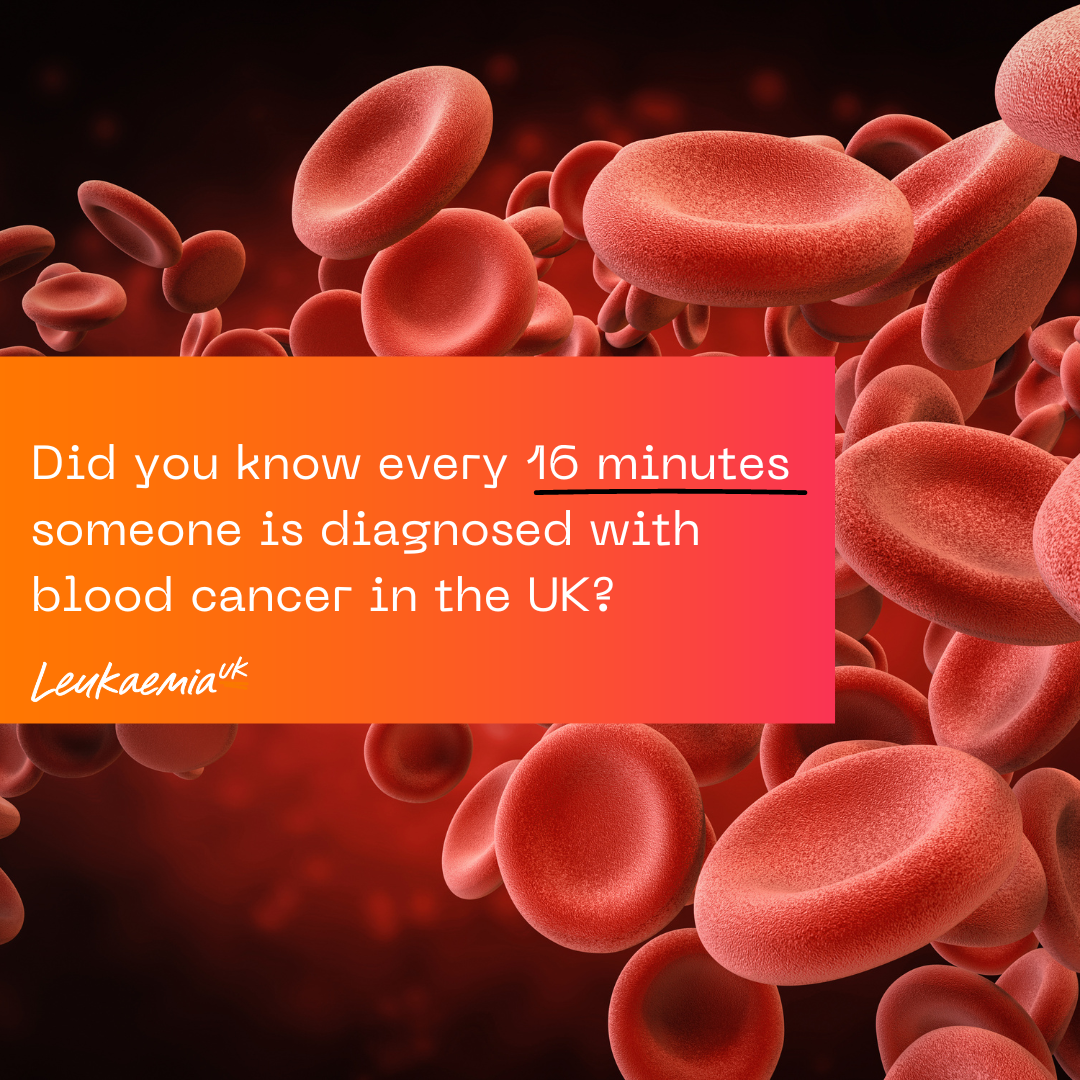
Every 16 minutes someone in the UK is diagnosed with blood cancer, the fifth most common type of cancer in the UK.
Around a quarter of a million people are currently living with blood cancer and over 40,000 people are diagnosed each year in the UK. Despite treatment progress, blood cancer is still the UK’s third biggest cancer killer.
How can you spot blood cancer?
The signs and symptoms of blood cancer vary depending on the type of blood cancer. Symptoms can be vague or non-specific in nature, so are often hard to spot.
For leukaemia, the most common symptoms can include:
- Fatigue
- Repeat infections
- Unusual bruising or bleeding
Anyone experiencing any of these symptoms should contact their GP and request a blood test.
During Blood Cancer Awareness Month, Leukaemia UK are collaborating with Leukaemia Care to raise awareness of the signs and symptoms of leukaemia, because early diagnosis saves lives. Read more about our Spot Leukaemia campaign and find out how you can get involved.
Related posts
4 July 2022
Cancer charities unite in encouraging the Government to address crucial issues as part of their “War on Cancer”
In collaboration with our partners and as part of the One Cancer Voice group, Cancer 52 and Blood Cancer Alliance, we have called on the Government to take account of a wide range of recommendations as they finalise the 10-Year Cancer Plan to be announced later this year.
15 June 2018
Nick Boles’ Ambulatory Care Unit opening speech
An edited extract of the speech Nick Boles MP made at the official opening of the Leukaemia UK Ambulatory Care Unit.
18 October 2021
Leukaemia UK drives forward progress for leukaemia research through five new John Goldman Fellowships for 2021
Leukaemia UK announces five new John Goldman Fellows for 2021 to accelerate progress and stop the disease devastating lives.
1 August 2022
One Cancer Voice writes to Sajid Javid ahead of 10-Year Cancer Plan
Today, with over 50 cancer charities, we wrote to the Secretary of State for Health & Social Care, Sajid Javid, to set out our expectation for next month’s 10-Year Cancer Plan….