
10 Apr 2017
A day in the life of a lead cancer nurse
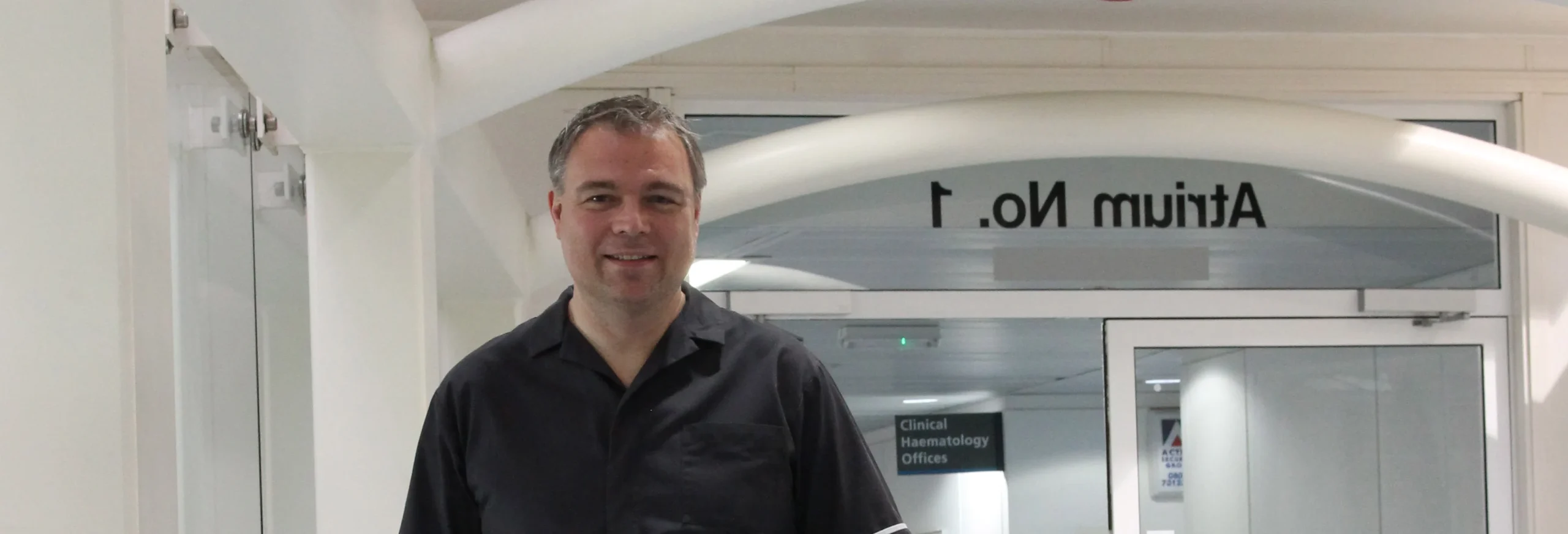
Lead cancer nurse Gavin Maynard-Wyatt’s post at Guy’s Hospital in London was initially funded for two years by Leukaemia UK. Here he describes a typical day working with teenagers and young adults
 My working day starts before I even reach the hospital. The first job of the week is texting – I help 150 or more teenagers and young adults with cancer and contacting them through my work phone is a great way to communicate. They don’t want to be bothered with calls that interrupt their day.
I’ll ask them how they are and if I can help them with anything. On a good day, 75 will respond, sometimes it will be half that number.
I keep my diary very fluid. If a young person wants my help, they want it straight away and I need to be able to see them when they need me, rather than the other way round.
Our team at Guy’s
At Guy’s we are a growing team – a nurse, doctor, psychologist, dietitian, social worker, community youth worker and a fertility expert. We also have access to a cancer physiotherapist and an occupational therapist.
We have a monthly meeting where we can all come together to discuss newly diagnosed TYAs (teenage and young adults), current TYAs with ongoing issues, and how we can keep our service growing and strengthening.
We now have a weekly clinic for young people which I start preparing for. This is a really important clinic because a lot of the people I see feel they are the only young person who has cancer. Here, they can see other people their age and know they’re not alone.
We try to see up to 10 patients per clinic which means we can see each person for about 20 or 30 minutes. They see each member of the team, so are with us for about two hours.
New ways to offer support
In 2011, I set up a Facebook page for online peer support. It wasn’t easy to do, but once I’d got permission I became the first person to have this type of cancer/brain tumour page that allowed young people to talk to each other and share their worries, concerns and experiences.
Now, part of my day is spent checking the page to ensure everyone is being respectful of each other. This is a significant commitment, but a necessary part of my role.
I offer all my teenagers and young adults one-to-one support, which happens away from the weekly clinic. Not everyone needs to be seen by a psychologist, as they might just need someone to listen to them away from family and friends.
Making a difference
This is the part of the job I enjoy the most. It’s an honour for me to be able to provide this kind of service – to know that a young person trusts me with their story, experience, worries and concerns, and to know that once the hour is up, they tend to walk away feeling happier because someone cares about them and their journey.
In my experience teenagers and young people cope reasonably well with diagnosis and treatment, so it is often once treatment has ended and six months have gone by that they finally look back and think ‘What happened to me?’
As I cover three main hospitals I get the chance to spend some of my day visiting young people who are inpatients. Being in isolation can be a lonely part of the treatment. I like to see them and spend time talking.
This is a great opportunity to find out how they are really coping with their diagnosis and how it has affected their friendship circles. So often we hear that once diagnosed they lose friends. This can add to their isolation so talking about it can help them realise it is nothing they did and that it is a common issue.
I’ve been in this job for eight years now and can really see the impact of the work we’re doing. It is fantastic that Leukaemia UK enabled me to come along and set up this post, which is now deemed fundamental to the way Guy’s and St Thomas’s Hospital Trust treats teenagers and young adults with blood cancer.
Help Leukaemia UK continue to support outstanding blood cancer care specialists.
Read more stories from our community.
Related posts
10 November 2021
An urgent call from One Cancer Voice group of cancer charities for the Comprehensive Spending Review to deliver Government commitments to improve cancer survival & care
Leukaemia UK has joined with 50 other cancer charities in writing to the Prime Minister, Chancellor of the Exchequer and Secretary of State for Health and Social Care. We are calling on the Government to urgently deliver on commitments to improve cancer survival and care in the forthcoming Spending Review.
5 July 2023
UK’s top chefs unite at gastronomic spectacular to raise funds for life-saving leukaemia research
Twenty of the most accomplished and innovative chefs from the UK food scene will gather at The Dorchester on Monday 18th September 2023 for ‘Who’s Cooking Dinner?’, a one-of-a-kind night…
9 January 2018
Blood cancer and your emotions – an expert’s insight
Specialist blood cancer counsellor Philip Alexander explains why talking therapies can form a crucial part of treatment
2 August 2023
Friends and family of Leicestershire woman who died from rare cancer campaign for more research and awareness
The family of a Leicestershire woman who died in July 2022, on the day of her leukaemia diagnosis, has raised over £17,000 in her memory to support Leukaemia UK. On…